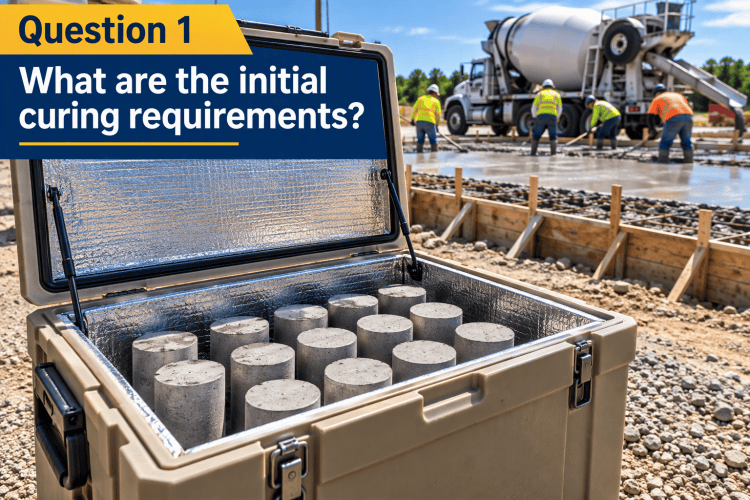
Determine how and where test specimens will be initially cured. Options can include an immersed, temperature-controlled environment or a temperature-controlled storage box. Simply exposing acceptance specimens to jobsite environmental conditions does not comply with ASTM C31. 
Don’t wait until concrete is arriving to answer this question. Current industry guidance also identifies contractor responsibilities for providing project-site space and electrical power for facilities the owner’s testing agency uses for initial curing. 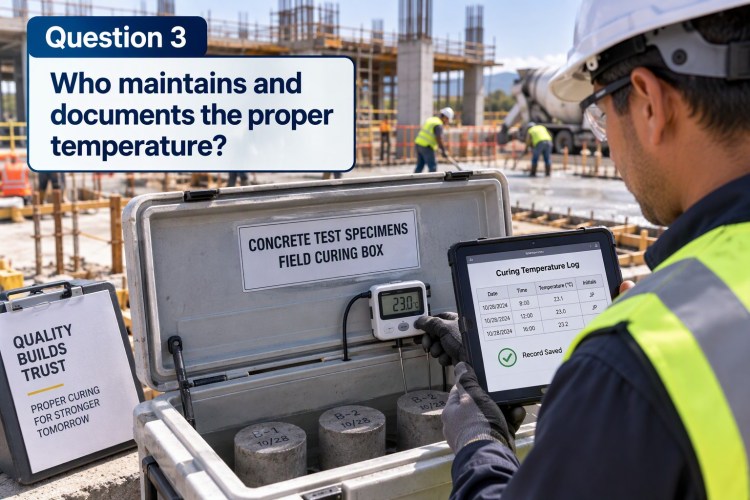
Assign responsibility before placement begins. It is important to identify who will maintain the specified curing environment and record its temperature. The NRMCA acceptance-testing checklist specifically asks who is responsible for maintaining and recording storage temperature. 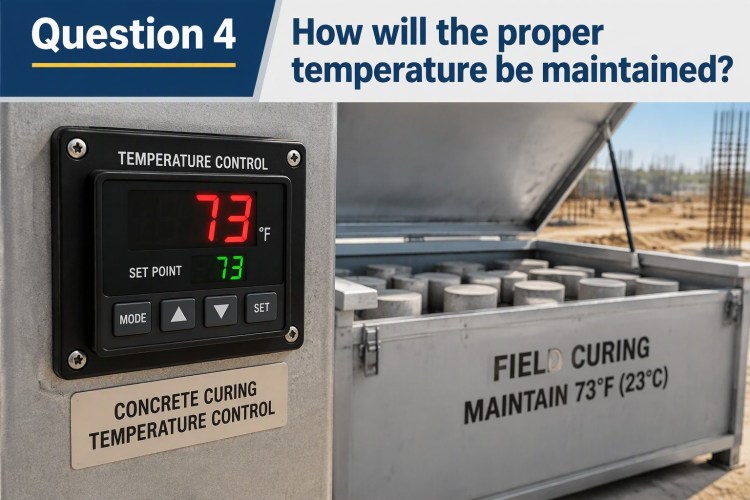
A curing box alone is not sufficient. The meeting should establish how the required environment will be maintained under anticipated jobsite conditions. 
Friday placements require particular attention. Establish when specimens will be transported to ensure weekends and holidays do not create gaps in the planned handling and curing process. 
If specimens must be retrieved when the project is closed, determine in advance how authorized testing personnel will gain access. Gates, security, and locked buildings should not become unexpected obstacles. 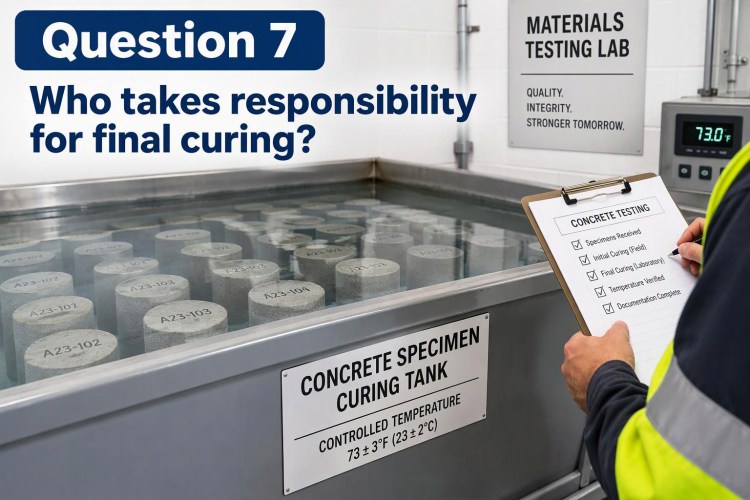
Finally, establish where the specimens will go, who will receive them, and who is responsible for final curing in accordance with ASTM C31 requirements.
Every day, concrete contractors participate in pre-placement meetings to prepare for the big pour. Whether held in the jobsite trailer or virtually, these meetings bring together key project participants to work through the logistics of placing, finishing, testing, and accepting concrete.
For many projects, meeting leaders follow the NRMCA/ASCC Checklist for Concrete Pre-Construction Conference for the meeting’s framework. Developed through a partnership between the National Ready Mixed Concrete Association (NRMCA) and the American Society of Concrete Contractors (ASCC), the checklist helps project participants establish procedures and responsibilities before placement begins.
The checklist initially covers start times, production rates, mix designs, placement logistics, and curing, which often receive the most attention. However, contractors should not overlook another important item typically addressed at the end of the meeting: the plans for handling test specimens after they are made.
Why? Because those specimens may ultimately provide the strength results used to determine whether the concrete is accepted.
Before ending the pre-placement meeting, contractors should ensure the seven basic questions in the F.2 Test Cylinder Storage and Transportation section of the Pre-Construction Checklist have clear answers. The questions in this section specifically address initial curing methods and responsibility for providing and maintaining the specimen storage environment.
Protect the Test That Protects the Project
Answering these questions may take only a few minutes, but the responses are important when strength results are used for acceptance decisions. Contractors do not need to assume the testing agency’s responsibilities, but they must ensure the process is planned and responsibilities are clearly assigned. Producing, placing, and finishing quality concrete requires careful planning; protecting the specimens used for evaluation deserves the same attention.
If you want to learn more about what to do when testing specimens aren’t properly handled, sign up for this 2027 World of Concrete seminar: Our Concrete Strength is Low, What Now? A Contractor’s Guide to Low Breaks. Presenters Jeff Groom and Mike Eads will lead a 90-minute discussion on how to handle a range of situations, from waiting for 56-day results to concrete coring to tear-out. One aspect of a low-break investigation that is most misunderstood is the verification testing program. An effective coring program, one that yields accurate and timely results, isn’t as simple as one might think, suggests Groom. “We hope that by attending this seminar, you will understand how location, diameter, and length of cores need to be considered,” says Groom. Their presentation will also cover which entities become responsible for these types of issues, ranging from the testing agency to the concrete supplier to the concrete contractor.
Producing, placing, and finishing quality concrete requires careful planning; protecting the specimens used for evaluation deserves the same attention.

