Maximizing Community Engagement with Plant Tours

When I was a plant manager, I had mixed feelings when the public relations manager suggested we open our operations to public or private tours. I had concerns about how to justify the unbudgeted material and labor costs needed to spruce and tidy normal work areas. Our sales folks would remind me not to delay any customer deliveries. And finally, there was the fear of the unknown consequences that non-routine activities often bring, such as potential disruptions to our regular operations or negative feedback from visitors.

Despite my concerns, most of our tours went well. And when I think about,  the public events helped install a sense of pride in our production and sales teams.
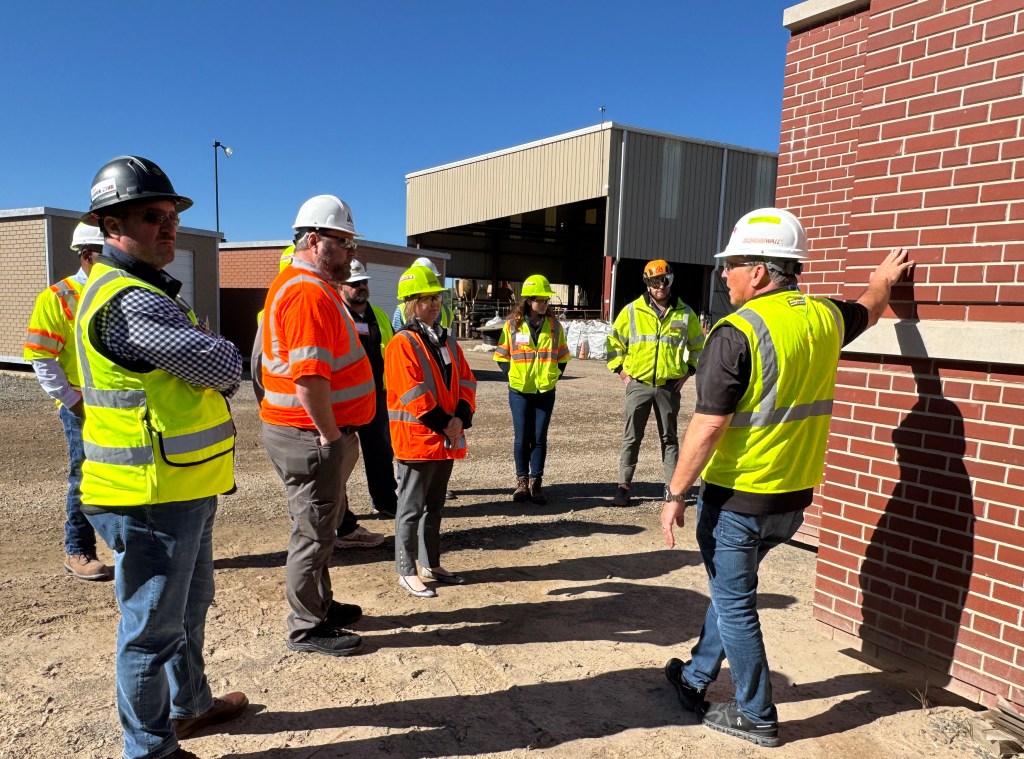
Matthew Smith, vice president of sales and marketing at Smith-Midland, discusses the
innovation and versatility of architectural precast concrete panels during a tour at the producer’s plant in
Virginia during PCI Precast Days. Photo: Sarah Crandall

So it’s not too surprising that Precast/Prestressed Concrete Institute (PCI) members found success when many welcomed visitors to their plants last month during the 2025 PCI Precast Days, a series of events aimed at promoting the precast concrete industry. You can learn more about their experience by reading 2025 PCI Precast-Days, which features insights and success stories from participating plants.

Hosting an open house and conducting focused tours is not just a one-day event. It’s a strategic move that can transform your business.

Benefits of Plant Open Houses

When concrete producers open their facilities to public events and tours, they unlock four significant business advantages.

Enhancing Local Trust: – Plant tours help transform what neighbors think they see beyond the berm or fence into reality. Visitors witness modern safety protocols, environmental stewardship, and the production of materials.

Recruiting – Open houses expose students and job seekers to concrete industry careers. Today’s operations are modern manufacturing operations that offer diverse opportunities across equipment operations, quality control, and sales and marketing.

Education: A walk beyond the entry gate provides design professionals, neighbors, and customers with a new level of product knowledge. Visitors gain a new understanding of production capabilities and quality standards. 

Creating regulatory goodwill – When communities understand your processes and safety measures, permit renewals and expansion approvals face fewer obstacles.

Planning Your Open House

If you want to consider developing your own plant open house, here are some tips to ensure a safe and effective experience.

Set Clear Goals: Define whether the focus is education, recruitment, or public relations.  

Create a pre-vist checklist. Prepare for the visit with a pre-pour like meeting involving all tour leaders. Be sure to update everyone, even staff who won’t be in contact with the tour.  Be sure to provide essential talking points.

Safety First – With the goal in mind, create visitor pathways, provide required protective equipment, and assign trained guides to every group.

Strategic Timing – Schedule events during optimal weather and production periods.

Plan Hands-On or Activities: Interactive demos or kid-friendly stations increase engagement.

Develop a follow-up plan:  Use social media to share event photos, invite attendees to visit the company website, and gather feedback to improve future events.

Explore the New CIM Website: Shaping the Concrete Industry

I find the historical connection between the origins of the Concrete Industry Management (CIM) program and the internet interesting. Both initiatives took their first steps in 1994.

When industry leaders from the RMC 2000 initiative were organizing CIM’s proposed launch in 1995, there were only 623 websites on the entire web at the beginning of the year.

While CIM’s growth may not have been as rapid as the internet’s, the impact of the more than 1,600 CIM graduates is just beginning, and it is indeed significant. Their contributions are shaping the industry’s future, making us all proud and invested in CIM’s success.

A new connection

The National Steering Committee for the CIM program hopes to establish a historical relationship with the web in 2025. In November, CIM leadership announced the launch of its newly redesigned website.

The new CIM site, designed with all the modern features and capabilities that current technology offers, is set to play a pivotal role in CIM’s future. It aims to be the central hub of a renewed recruiting effort, connecting the industry to the dynamic future that CIM offers potential students.

We encourage you to visit the website and explore the program’s growth over the last 30 years. Help the CIM recruiting effort by sharing the website with everyone you know. By doing so, you become an integral part of the CIM community, helping us reach more potential students.

Concrete Innovation in Milan’s Arena Santa Giulia

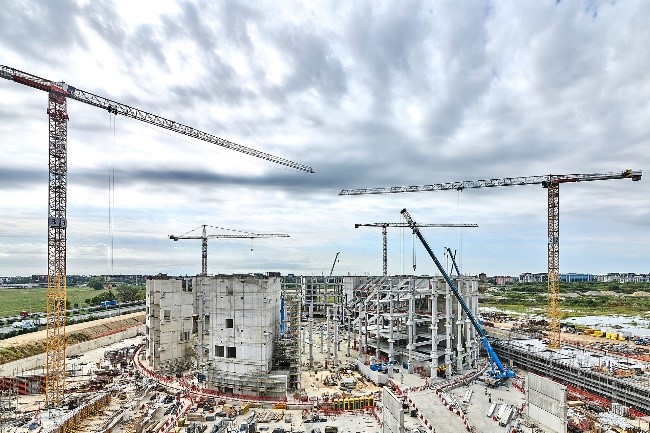
Liebherr top-slewing cranes of the EC-B and EC-H series in operation on the construction of the MSG Arena in Milan.

In February, most of the crowd at the Arena Santa Giulia will focus on the action at center ice as they watch the world’s best hockey players participate in the 2026 Winter Olympics. However, I’m sure that a few concrete enthusiasts will examine one of the only two new buildings built for the entire celebration and take pride in the role concrete played in its construction.  

An Olympic Concrete Showcase

Arena Santa Giulia is a testament to concrete’s versatility—sculptural, structural, and sustainable. David Chipperfield Architects designed the stadium. Concrete enabled the team to merge architectural ambition with engineering discipline, delivering a venue built to endure beyond the Games while honoring Milan’s Roman heritage.

Design Intent

The new event venue is a key part of Milan’s southeastern district’s reinvention following Foster + Partners’ Santa Giulia masterplan that connects transit, green space, and public life.

Chipperfield followed this design philosophy by creating a vibrant space for shared experiences. The site features a 10,000-square-meter public piazza, establishing a community gathering space reminiscent of a Roman forum. The structure’s elliptical form continues this theme by echoing Milan’s ancient Roman amphitheater, creating visual continuity between past and present. Following the Olympics, the owners will transforms the hockey stadium into Italy’s largest indoor entertainment venue, with plans to host concerts, festivals, and sporting events.

Concrete Innovation

Arena structural engineers specified on concrete recipes that prioritized durability and long-lasting performance in Milan’s extreme mountainous environment. Material engineers opted for high-performance concrete mixes with low permeability and enhanced compressive strength for the load-bearing elements. The strength of these concrete mixes accommodated the structure’s 40-meter height and elliptical geometry, spanning 175 meters by 145 meters.

The mixes were robust enough to allow contractors to cast the exposed concrete surfaces with smooth formwork, highlighting architectural detailing and material color uniformity.

The mix designs also included recycled aggregates and supplementary cementitious materials, which reduced the as-built carbon footprint, aligning with Milan’s sustainability goals.

You can learn more about this structure and how concrete construction participated in other Olympic site projects. Liebherr recently posted a news item describing how contractors combined technology and expertise to achieve success in event planning as reported in Liebherr Cranes at Work for the 2026 Winter Oympics.

You can also learn about the equipment manufacturer at www.liebherr.com, or visit Liebherr USA at World of Concrete 2026, Booth C6049 and Booth N844

**Summary:** Arena Milano combines advanced concrete engineering and parametric design to create Italy’s largest indoor venue for the 2026 Winter Olympics.

“Building The New Construction Rules” Finalists Revealed

Cemex Ventures has announced the finalists in the 2025 Construction Startup Competition. In its 9th year, the competition is reported to be the biggest startup competition in the construction sector.

The competition is sponsored by Cemex Ventures, Caterpillar, Dysruptek, Ferrovial, Hilti, Leonard (VINCI Group), NOVA by Saint-Gobain, Trimble, and Zacua Ventures.  The judges received more than 50 entries. In their announcement, the judges said, “We faced the challenging task of evaluating an unprecedented level of talent.”

The judges thought that participating startups showcased exceptional innovation, vision, and transformative potential, marking a turning point in the industry. Each proposal was a clear demonstration of the outstanding talent driving the transformation of construction. “The ideas presented not only challenged traditional models but also opened new possibilities for advancing the industry,” said the judges..

The Construction Startup Competition continues as the finalists prepare to take the stage at two key industry events:

Global Pitch Day at Trimble Dimensions

On November 10th, the eight winning startups attending the Pitch Day at the Trimble Dimensions User Conference will present their solutions to a panel of executive representatives, industry investors, and potential business partners.

 The three startups delivering the most compelling pitches will receive cash prizes and be recognized as the Gold, Silver, and Bronze medalists.

European Pitch Day at Recotech

Shortly after, on November 18th, the five startups invited to the Recotech conference will also showcase their solutions to a select audience. They will compete for the top spot in our brand-new European Pitch Day.

The company with the strongest value proposition and presentation will be recognized as the European Pitch Day Champion and will receive a cash prize. Breaking the Limits of Construction!

The thirteen winners in this year’s competition are:

🌱 Green Construction:

  Enhanced Productivity:

🤖 Future of Construction:

This article is based on a press release provided by Cemex Ventures.

Source: Cemex Venture Press Release, October 21, 2025. To learn more, visit https://www.cemexventures.com/constructionstartupcompetition/.

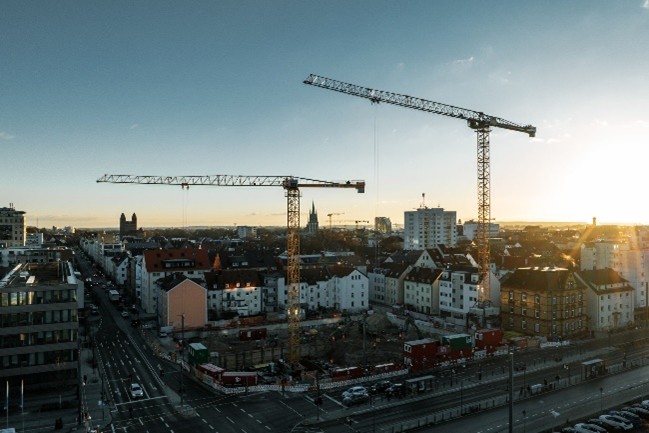
Innovative Crane Technology for Ulm’s New Residential Project

This article is based on a press release provided by the Liebherr Group.

A modern building complex with 142 residential units is currently under construction on Karlsstraße in Ulm. To ensure the efficient execution of the project, the construction company is relying on two Liebherr Flat-Top cranes from the EC-B series. Both cranes are supplied by Nagel Baumaschinen Ulm GmbH from its in-house rental fleet.

Due to the restricted space on site, the choice fell on the 370 EC-B 16 Fibre and the 202 EC-B 10 Litronic. Both cranes deliver compact design, powerful performance and state-of-the-art technology. The project is located on a 4,500 m² construction site at the corner of Karlsstraße and Neutorstraße and is scheduled for completion by the end of 2025.

Fibre rope crane with high load capacity and long service life

A particular highlight on the site is the 370 EC-B 16 Fibre, mounted on a portal. With a radius of 55 metres and a hook height of 53.5 metres, this Flat-Top crane offers optimal conditions for demanding lifting operations. Equipped with Liebherr’s innovative fibre rope technology, it achieves up to 40 percent higher peak loads compared with steel rope cranes, while also offering a service life up to four times longer.

Developed by Liebherr, the fibre rope is highly resistant. Its flexible protective outside reliably shields the load-bearing red core from external factors such as sharp concrete edges or operating errors. Should damage occur, the modular service concept allows repairs to be carried out directly on site, a decisive advantage for uninterrupted progress on the project.

Compact design for urban construction sites

The Fibre crane is complemented by the 202 EC-B 10 Litronic, which is mounted on foundation anchors with a radius of 45 metres and a hook height of 48 metres. Its compact upper carriage combines slewing gear, switchgear and slewing ring in a single unit. This design offers a significant benefit in terms of transport and assembly, making the crane particularly well suited to sites with limited space.

“The construction companies involved are impressed by the performance and efficiency of the Liebherr tower cranes,” said a spokesperson for Nagel Baumaschinen Ulm GmbH.

Partnership for project success

As a long-standing Liebherr sales and service partner, Nagel Baumaschinen Ulm GmbH has been supporting the project from the beginning. “We assisted the client in planning the site set-up, from logistics through to crane assembly, providing expert guidance tailored to the project’s requirements,” the spokesperson added.

With the deployment of the EC-B cranes in Ulm, Liebherr once again underlines its role as a reliable partner for complex urban construction projects.

About the Liebherr Tower Cranes Division

More than seven decades of experience have made Liebherr a recognised specialist for lifting technology on all types of construction sites. The range of Liebherr Tower Cranes encompasses an extensive selection of high-quality tower cranes that are used worldwide. This includes fast-erecting, top-slewing, luffing jib and special-purpose cranes as well as mobile construction cranes. In addition to these products, Liebherr also offers a wide range of services that complete the company’s portfolio: Tower Crane Solutions, the Tower Crane Center and Tower Crane Customer Service.

About the Liebherr Group

The Liebherr Group is a family-run technology company with a highly diversified product portfolio. The company is one of the largest manufacturers of construction equipment in the world. It also provides high-quality, user-oriented products and services in a wide range of other areas. The Liebherr Group includes over 150 companies across all continents. In 2024, it employed more than 50,000 staff and achieved combined revenues of over 14 billion euros. Liebherr was founded by Hans Liebherr in 1949 in the southern German town of Kirchdorf an der Iller. Since then, the staff have been pursuing the goal of achieving continuous technological innovation, and bringing industry-leading solutions to its customers.

Source: Liebherr Group Press Release, October 16, 2025. View the full release here.

Introduce Yourself (Example Post)

This is an example post, originally published as part of Blogging University. Enroll in one of our ten programs, and start your blog right.

You’re going to publish a post today. Don’t worry about how your blog looks. Don’t worry if you haven’t given it a name yet, or you’re feeling overwhelmed. Just click the “New Post” button, and tell us why you’re here.

Why do this?

  • Because it gives new readers context. What are you about? Why should they read your blog?
  • Because it will help you focus your own ideas about your blog and what you’d like to do with it.

The post can be short or long, a personal intro to your life or a bloggy mission statement, a manifesto for the future or a simple outline of your the types of things you hope to publish.

To help you get started, here are a few questions:

  • Why are you blogging publicly, rather than keeping a personal journal?
  • What topics do you think you’ll write about?
  • Who would you love to connect with via your blog?
  • If you blog successfully throughout the next year, what would you hope to have accomplished?

You’re not locked into any of this; one of the wonderful things about blogs is how they constantly evolve as we learn, grow, and interact with one another — but it’s good to know where and why you started, and articulating your goals may just give you a few other post ideas.

Can’t think how to get started? Just write the first thing that pops into your head. Anne Lamott, author of a book on writing we love, says that you need to give yourself permission to write a “crappy first draft”. Anne makes a great point — just start writing, and worry about editing it later.

When you’re ready to publish, give your post three to five tags that describe your blog’s focus — writing, photography, fiction, parenting, food, cars, movies, sports, whatever. These tags will help others who care about your topics find you in the Reader. Make sure one of the tags is “zerotohero,” so other new bloggers can find you, too.

Rick Yelton

For more than three decades, I’ve had the honor of reporting and commenting on the happenings in the concrete and masonry industry. It’s been a privilege to be part of a community that’s been a sponge for innovation, and I’m grateful for the opportunity.
While I found those times to be creative, the last five years have been a whirlwind of change. We are currently in the most dynamic era of innovation and technology adoption our industry has ever experienced.


One thing I’ve noticed is that many of you are so busy it’s hard to make sense of what is happening. Since my role is that of an observer, I can sit back and reflect on the most interesting trends and initiatives happening everywhere.


I plan to post several blogs each week highlighting new product releases and industry happenings, interviewing engaging industry influencers, and commenting on significant trends that will affect your businesses.

Your thoughts and feedback will help me focus on what you’d like to learn.

Please, let’s keep this conversation going.