Theming Could Be a Concrete Contractor’s Next High-Value Specialty
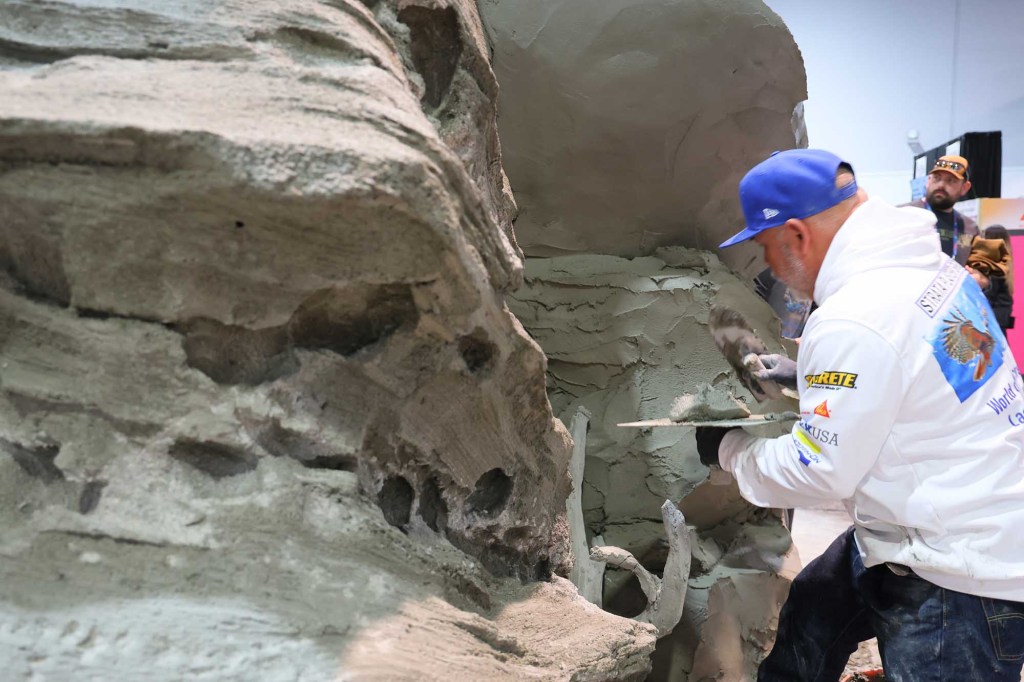
At the past three World of Concretes, thousands of attendees have been awed by the craftsmanship on display in both Decorative Concrete Live and Artificial Rock Carving Live. They met artisans who shared innovative techniques for transforming ordinary plain concrete into decorative elements.
While many attendees were drawn to these demo areas by the wide array of artistic designs, interest in this type of concrete work is growing for business reasons. Contractors that include advanced decorative techniques and theming in their portfolios recognize the opportunity to compete on specialized capability and craftsmanship, not simply production and price.
Due to increased interest in these specialties, World of Concrete is rebranding Artificial Rock Carving Live as Themed Finishes Live. The event will feature well-known artisans demonstrating vertical rock carving, plaster finishes, sculptural textures, specialty coatings, and finishing of 3D-printed wall systems.
Moving beyond the park
Many contractors think that theme construction is restricted to amusement parks. Several studies suggest theme parks represent the largest individual market for themed-environment work, perhaps as much as half the market. But interest is growing in the institutional, commercial, and hospitality markets as well. Beyond zoos, aquariums, and municipal water parks, resorts, retail destinations, and recreational facilities use themed environments to turn ordinary spaces into memorable destinations.
Owners, architects, and design professionals have used traditional decorative concrete techniques such as staining, stamping, polishing, overlays, and textured finishes to create distinctive surfaces while preserving concrete’s functionality. Now, many are pushing further, asking contractors to shape fresh concrete into non-traditional forms that support branding and storytelling.
Transformational opportunities
Contractors in the theming world take concrete beyond its conventional structural and architectural roles and turn it into a creative medium. Using specialized sculpting, texturing, coloring, forming, and finishing techniques, craftspeople can make concrete resemble everything from natural rock and weathered stone to wood, masonry, and imaginative architectural elements. The goal isn’t simply to build with concrete, but to use concrete to help create a convincing environment or experience.
Themed concrete projects often span multiple contract specification categories. Project scopes may include structural or cast-in-place concrete, reinforcing and armatures, shotcrete or specialty-placed concrete, architectural forming, sculpting and carving, coatings and specialty finishes, and scenic fabrication or artistic work. Combining these elements adds new dimensions such as appearance, illusion, storytelling, and visitor experience.
Adding theming to a contractor’s portfolio allows a company to showcase the possibilities of concrete. By introducing new specializations, contractors can move beyond commodity competition. Theming projects also increase owner-contractor interaction, creating opportunities to add value.
The transition is more than an update to a quality control program. It’s a commitment to craftsmanship, the skilled application of knowledge, experience, creativity, and attention to detail to produce work that goes beyond basic functionality. In themed concrete, craftsmanship matters because success depends not only on creating a defect-free, structurally sound element, but on how convincingly craftspeople can shape, texture, color, and finish the material to achieve the desired visual effect.
How difficult is this transition? In a upcoming note, I will share ideas on how established contractors may already possess much of the technical foundation needed for themed work.

